
Why parents get in touch
Usually, parents notice something before their child does.
- They stand or walk unevenly
- One shoulder or hip sits higher than the other
- Their posture looks different from their peers
- They have recurring aches or discomfort
- They are starting a new sport or training program
- They struggle with coordination or balance
- They have scoliosis or another known postural difference
- They want to build a strong movement foundation early
What I can offer
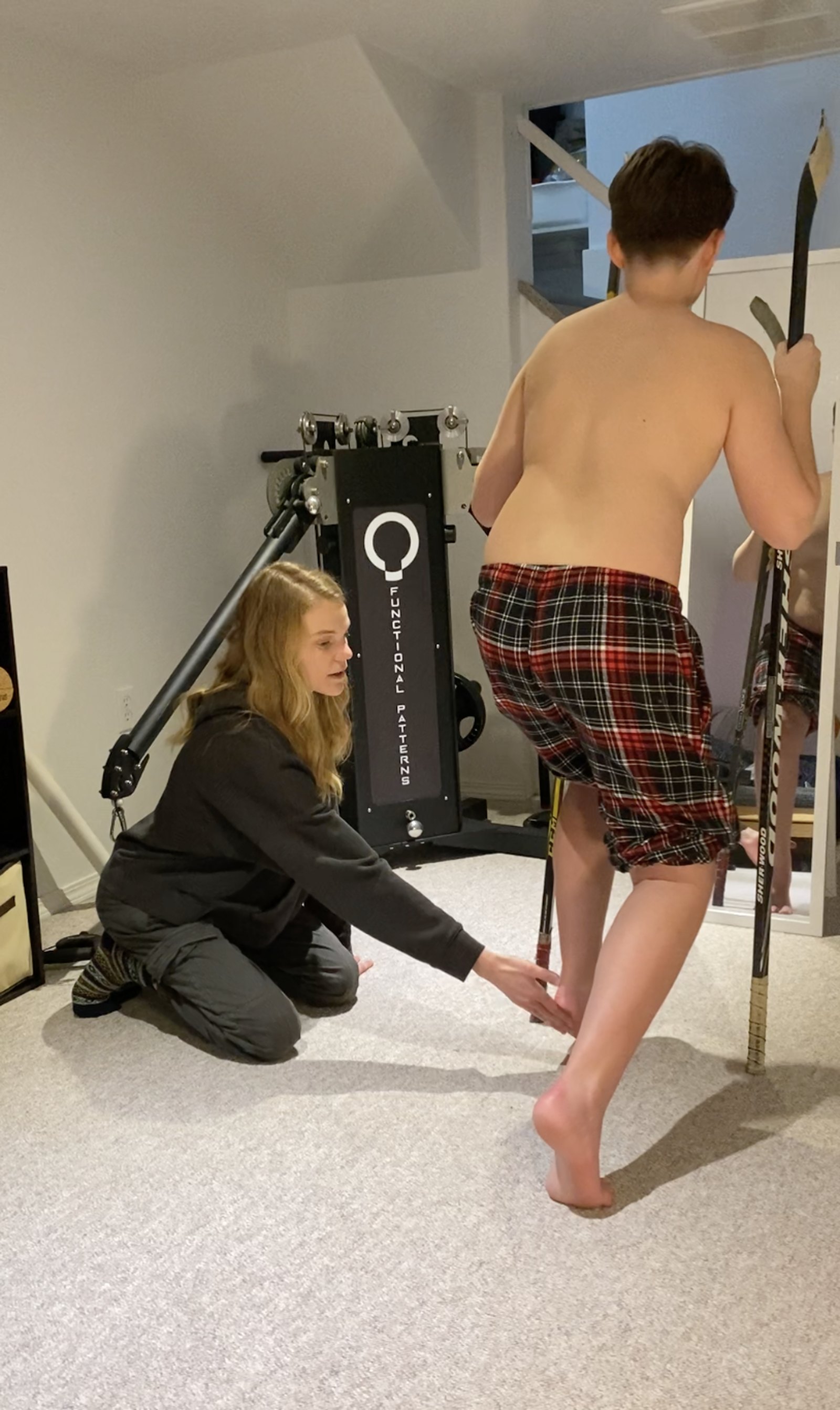
Training that starts with how your child actually moves and is adapted to their age, development, abilities, and interests.
The same first principles of human movement apply to children and teenagers too. We prioritize optimizing gait mechanics from the ground up to help them become more efficient movers.
We coach in a way they will tolerate and enjoy, to help them develop strength, coordination, control, and confidence through movement.
Why the age matters
Movement patterns get more established the longer they run. A pattern that has had twelve years to bed in is easier to work with than one that has had forty. That is not a reason to panic about a nine-year-old who stands oddly. It is a reason not to assume they will simply grow out of it.
What sessions look like
Kids don’t need to be lectured about alignment or told to “fix” their posture. They need to understand what they’re doing and have a reason to stay engaged.
- Everything is explained in age-appropriate language
- Exercises are introduced in a way that makes sense to them
- We work at a pace they can handle
- Progress is encouraged rather than pressured
- Sessions include variety to maintain focus
- We celebrate improvements along the way
- Exercises can be adapted to their interests, abilities, and goals
A parent is welcome to stay for the whole session, and for younger children, we would prefer it.
The assessment comes first, at any age
The same starting point as everyone else: how they stand, walk and breathe. What changes is how it is explained and how long we spend on any one thing.
How I approach it
What parents ask me
How young is too young?+
It depends far more on the child than the birthday. Tell me their age on the free call and I will give you a straight answer, including if that answer is "not yet".
My child has been diagnosed with something. Can they still train?+
Often yes. Tell me about it on the free call.
Can I stay in the session?+
Yes. For younger children I would rather you did.
What if they hate it?+
Then it is not the right time, and I would rather tell you that than book you in for six sessions of a fight. Nothing is lost by finding out on a free call.
Related pages
Start with a free 15-minute call
Fifteen minutes, no cost, no commitment. The call is with you, not your child.